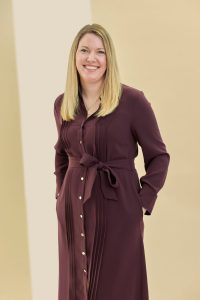
Kate Johnson
- Partner
- Private Client
Philanthropy is no longer just about giving back. Increasingly, it is being used to unite families around shared values, prepare future generations for responsibility and create a lasting legacy. We look at how charitable foundations and donor advised funds can support these goals while delivering meaningful impact.
For many high-net-worth individuals, philanthropy is increasingly becoming an integral part of wealth planning. Families are looking beyond tax mitigation and one-off donations, and moving towards a more strategic approach, to consider how their family values align with their charitable objectives, and creating structures to support giving over many years through generations of the family. We are noticing more consideration being given to not simply how much clients should give, but how they can give more effectively and create a lasting impact.
Charitable foundations can be used by families not only as an effective tax planning tool, but as a way to engage younger family members is decision making and wealth stewardship.
Many people are already aware of the tax advantages that giving to charity can have both during your lifetime and also on death; for example, any assets left to a UK registered charity will qualify for 100% IHT relief.
However, in addition to this, a family foundation can be used to involve younger family members in wealth stewardship and financial investment before they are required to make broader financial decisions in relation to family wealth and their own inheritance. It can also present opportunities for younger family members to prove that they can carry heavy responsibility and decision making in this context, for example acting as a trustee of a charity. At the same time, it offers an opportunity for senior family members to share the principles and values that underpin their approach to wealth management. Discussions surrounding charitable priorities can often be less contentious than discussions focused solely on private wealth.
Philanthropy can be used as a tool to bring family members together around a common objective, presenting opportunities to strengthen relationships between generations and create a long-lasting legacy for the family.
An important aspect of establishing a charitable family foundation is choosing the most appropriate structure, as this affects how the charity will operate, such as whether it can enter into contracts in its own name and whether the trustees will be personally liable for what the charity does. The most common structures for a charity are:
Charitable trusts are generally the oldest type of charitable structure, often associated with grant making and set up under a Will. A charitable trust is not a legal entity in its own right and business is therefore conducted in the name of the trustees, who can then be held personally liable for any debts or obligations under contracts.
A charitable company is a private limited company registered under the Companies Act 2006 that fulfils the essential criteria for charitable status. Charitable companies are usually limited by guarantee and not shares. Assets can only be applied towards carrying out the charitable purposes.
A CIO, which is the most recent form of charitable structure, has been specifically designed by the Charity Commission for the charity sector. A CIO is similar in nature to a charitable company, as it has its own legal identity, but CIOs are not subject to regulation under company law, only the Charity Commission.
Charitable companies and CIOs can be suited to family foundations for a number of reasons:
Whilst charitable foundations offer huge flexibility for family philanthropy, DAFs are also becoming increasingly popular. A DAF is a charitable giving vehicle administered by a charity or charitable sponsor into which a donor gifts funds (either during lifetime or through their Will) with recommendations on how these are invested and which charities should receive grants. A DAF is a good way of making charitable grants where donors know how much they wish to donate to charity on their death and want to benefit from the IHT relief but have not yet established which charities to support or they wish to recommend grants over a period of time. DAFs can also be used to facilitate overseas donations and receive a tax benefit on the donation which would not otherwise be possible when making a donation directly to an overseas charity.
As wealth planning continues to evolve, philanthropy is likely to play an increasingly prominent role in conversations between families and their advisers. Philanthropy can be used to achieve more than tax mitigation; it can support long term succession planning and strengthen family cohesion.
Our Private Client and Charities teams work closely with individuals and families to establish and manage philanthropic structures that reflect objectives, support effective governance and maximise long-term impact. Should you wish to explore how philanthropy can contribute to your wealth and legacy planning strategy, please contact Kate Johnson, Emily Minett or your usual Wedlake Bell adviser.
This article is for general information purposes only and does not constitute legal advice or a comprehensive statement of the law. Specific legal advice should always be sought in relation to individual circumstances.
Meet the team: